
PPS Injection Molding Built for Extreme Industrial Environments
PPMolding delivers precision injection molding for Polyphenylene Sulfide (PPS) — a high-crystallinity resin engineered for thermal stability, chemical resistance, and dimensional accuracy under continuous service temperatures above 200°C.
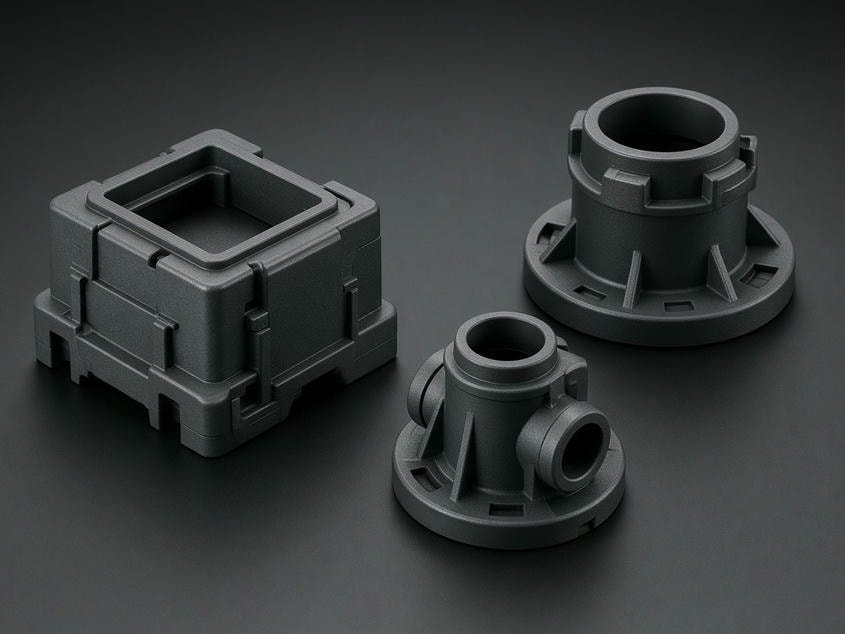
Understanding PPS Material Properties
PPS is specified for components that must operate in harsh environments where standard plastics fail. It provides exceptional thermal stability, chemical resistance, and inherent flame retardancy without the need for added flame retardant compounds.
PPS requires precise temperature control and proper drying. Moisture above 0.02% causes surface defects and reduced mechanical performance.
PPS Material Technical Specifications
| Property | Typical Value / Requirement |
|---|---|
| Continuous Use Temperature | 200°C – 240°C |
| Melting Point | Approx. 280°C – 290°C |
| Chemical Resistance | Excellent — resistant to acids, alkalis, solvents |
| Dimensional Stability | High — low moisture absorption |
| Mold Temperature Requirement | 130°C – 160°C (oil or high-temp heater) |
| Drying Requirement | Required — 120°C – 140°C for 3–5 hours |
| Typical Applications | Fuel systems, connectors, pump housings |
Equipped for High-Performance Resin Processing
Processing PPS requires machines capable of high melt temperatures and mold heating systems that maintain stable thermal conditions throughout the cycle. Our facility is configured for the specific demands of high-performance thermoplastics.
High-Temperature Processing
Injection machines equipped with precise barrel temperature control systems suitable for the high melt temperatures required by PPS resin.
Mold Temperature Control
Advanced oil heating units maintain mold temperatures above 130°C for optimal surface finish and mechanical property development.
Precision Tooling
Molds designed with appropriate shrinkage allowances and robust venting to accommodate PPS flow characteristics, minimizing gas traps and short shots.
Wear-Resistant Tooling
Hardened steel and wear-resistant coatings protect mold components against glass-filled and mineral-filled PPS grades over long production runs.
DFM Analysis for PPS Components
Successful PPS projects begin with Design for Manufacturing analysis. Our engineering team reviews your 3D models and technical requirements to identify potential issues before tooling investment, reducing risk and accelerating time to production.
What We Review
- ● Part geometry for manufacturability and flow analysis
- ● Material grade selection based on performance requirements
- ● Tolerance feasibility for high-crystallinity behavior
- ● Estimated cycle time and tooling cost projections
Key Design Considerations
Wall Thickness
Uniform walls prevent internal stresses and uneven cooling that lead to part distortion.
Draft Angles
Specific draft angles ensure smooth ejection despite PPS rigidity and low shrinkage.
Radius and Fillets
Optimal radii improve mechanical integrity by eliminating sharp-corner stress concentrations.
Gate Location
Flow analysis ensures consistent fiber orientation in glass-filled grades for uniform strength.
Engineering Support Across Critical Industries
We support engineering and procurement teams in sectors that demand high-performance materials operating at the edge of thermal, chemical, and mechanical limits.
Automotive
Fuel system components, sensor housings, and ignition parts exposed to high heat and chemicals.
Electronics
Precision connectors, switch components, and housings requiring high dielectric strength.
Industrial Equipment
Pump impellers, valve components, and bearings requiring wear and chemical resistance.
Medical & Analytical
Components for equipment requiring sterilization resistance and mechanical load capacity.
Value-Added Finishing Services
Beyond molding, we provide a complete range of secondary operations to deliver components ready for final assembly.
Precision Machining
CNC machining for features that cannot be molded directly, maintaining tight tolerances.
Insert Installation
Press-fitting or heat-staking of metal threaded inserts for robust threaded interfaces.
Surface Treatment
Laser marking for identification and specialized coatings for additional protection.
Full Assembly
Complete assembly of plastic components into sub-modules or final products.
Process Stability You Can Audit
Consistency is the primary requirement for PPS components in regulated and high-reliability applications. We implement rigorous quality control protocols at every stage to ensure every production batch meets your specifications.
Incoming Material Inspection
Verification of resin grade, lot, and moisture content before processing. Material traceability documentation is maintained throughout production.
Real-Time Process Monitoring
Continuous tracking of injection pressure, barrel and mold temperature, and cycle times to detect drift before parts are affected.
Dimensional Verification
CMM (Coordinate Measuring Machine) and precision gauges used to verify critical dimensions against engineering tolerances.
Appearance Inspection
Visual checks for gate vestige, flash, sink marks, weld lines, and surface uniformity against agreed AQL levels.
From RFQ to Production
A streamlined procurement process designed for engineering and sourcing teams working under tight timelines.
RFQ & Review
Submit 3D files, material data, and quantity requirements for our engineering review.
Technical Proposal
Manufacturing feasibility report with mold design recommendations and lead times.
Tooling Development
Upon approval, we proceed with mold design and fabrication for the PPS grade specified.
Sample Validation
Initial samples produced for your inspection, testing, and written approval.
Mass Production
Production commences with inventory and delivery schedules managed to your requirements.
Frequently Asked Questions
Common questions about PPS molding projects, material sourcing, and production timelines.
Need a specific answer?
Our engineers can review your application requirements and provide a technical response within one business day.
Talk to an engineerReady to Engineer Your PPS Component?
If you are developing a product that requires the thermal and chemical performance of PPS, our engineering team is ready to assist. Send your project files for a comprehensive manufacturing review and quotation.
Request a PPS Molding Quote
Share your project details and our engineers will respond within one business day.