
Plastic Parts Assembly Services for Finished Components
Receive finished plastic components instead of coordinating molding, printing, welding, assembly, and packaging across several suppliers.
PPMolding helps OEM purchasing, engineering, and operations teams reduce supplier count, shorten handoff time, and improve consistency between molded parts and final assemblies.
1
Coordinated manufacturing partner
10+
Secondary operations supported
4
Delivery formats from parts to kits
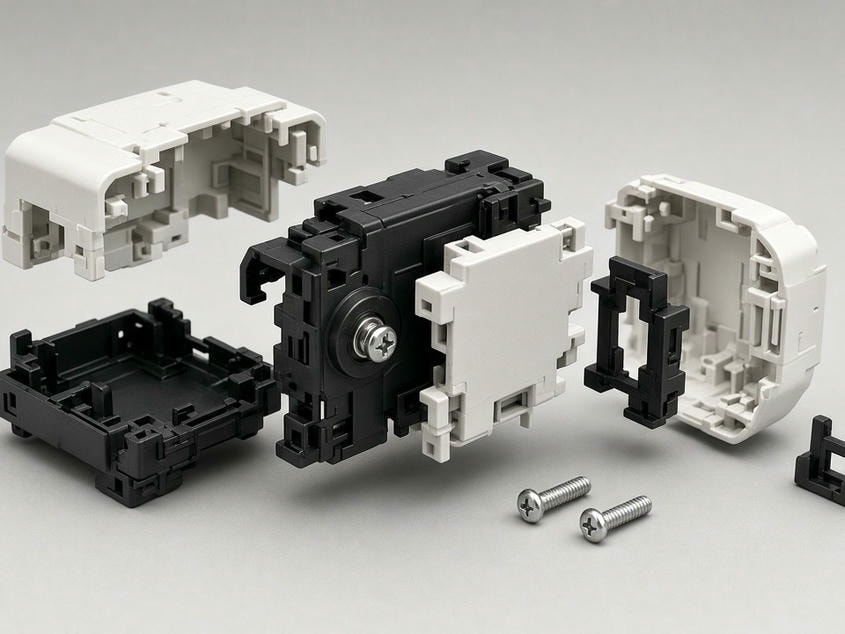
One coordinated workflow
Molding, secondary operations, assembly, inspection, packaging, and shipment preparation.
Why consolidate post-molding work
Turn individual molded parts into production-ready components
Plastic parts assembly covers the work performed after injection molding to turn individual components into usable parts, subassemblies, or packed finished goods.
A housing may need printing, threaded inserts, ultrasonic welding, inspection, packing, and shipment preparation before it is ready for production use. Managing each operation through a separate subcontractor creates additional transport, scheduling, quality, and communication risk.
By handling these operations after molding, we help purchasing, engineering, and operations teams reduce coordination work and improve consistency between the molded part and its final assembly.
Integrated capabilities
Secondary operations for plastic parts
The right process depends on material, geometry, cosmetic requirements, tolerance, and production volume. We review these factors before tooling or before transferring an existing project.
| Process | Typical application | Customer receives |
|---|---|---|
| Pad printing | Logos, text, symbols, small graphics | Accurately printed molded parts |
| Screen printing | Large printed areas, panels, covers | Consistent printed surfaces |
| Laser marking | Part numbers, serial codes, warnings | Durable identification |
| Painting | Decorative or functional finish | Color-matched or protected surfaces |
| Ultrasonic welding | Plastic-to-plastic joining | Assembled housings or sealed subassemblies |
| Heat staking | Joining covers, plates, and components | Permanent mechanical assemblies |
| CNC machining | Holes, slots, trimming, special features | Molded parts with adjusted features |
| Insert installation | Threaded inserts and metal hardware | Parts ready for screw assembly |
| Adhesive bonding | Plastic, rubber, metal, or labels | Joined components where welding is unsuitable |
| Manual assembly | Multi-part products and hardware | Complete production-ready subassemblies |
| Packaging | Bulk packing, bagging, custom cartons | Parts packed for receiving or shipment |
Assembly scope
Plastic parts assembly capability parameters
Final feasibility is confirmed after reviewing drawings, samples, material specifications, annual demand, and quality requirements.
| Supported processes | Ultrasonic welding, heat staking, insert installation, pad printing, screen printing, laser marking, painting, CNC machining, adhesive bonding, manual assembly, inspection, and packaging |
|---|---|
| Assembly methods | Plastic-to-plastic welding, screw assembly, snap-fit assembly, insert pressing, hardware installation, adhesive fixing, label application, manual fitting, and subassembly build |
| Applicable parts | Electronic housings, enclosures, automotive subassemblies, appliance components, industrial parts, consumer products, medical equipment components, covers, panels, brackets, and connectors |
| Processing range | Prototype, pilot run, small batch, and production orders; scope is confirmed by part size, structure, material, and annual demand |
| Printing and marking | Logos, icons, warning marks, product labels, part numbers, orientation marks, and serial or batch identification where applicable |
| Joining options | Ultrasonic welding for suitable thermoplastics, heat staking, screws and inserts for serviceable assemblies, and adhesive bonding for selected materials |
| Hardware support | Threaded inserts, screws, nuts, pins, clips, small metal components, and customer-specified fittings subject to BOM review |
| Packaging methods | Bulk packaging, individual bagging, protective wrapping, divider cartons, export cartons, customer-specified labels, and assembly kits |
| Delivery forms | Molded parts with secondary operations, semi-finished subassemblies, fully assembled components, and packed finished parts ready for inbound receiving or final shipment |
| Documentation | Inspection requirements, packing lists, part drawings, assembly instructions, process notes, and project-specific quality records when agreed |
Joining and finishing expertise
Select the right process for the product
Ultrasonic welding and joining
For suitable materials and part designs, ultrasonic welding can reduce screws, improve assembly speed, and create a cleaner appearance. We review material, welding ribs, joint design, wall thickness, cosmetic surfaces, and required strength.
Printing, marking, and appearance
Pad printing suits small logos and curved surfaces. Screen printing supports larger panels and covers. Laser marking provides durable identification, while painting can support decorative, color, or functional requirements.
Inserts, machining, and hardware
Insert installation supports stronger threads and repeated fastening. CNC machining can add holes, slots, trimming, and design changes before mold revision. Manual assembly can include screws, clips, pins, gaskets, labels, and purchased components.
Joining method guide
Match the assembly method to the function
Heat staking
For plastic posts, covers, plates, and internal components.
Screw assembly and inserts
For products that need service access, disassembly, or repeated fastening.
Adhesive bonding
For mixed materials or designs not suitable for welding or mechanical fastening.
Snap-fit assembly
For parts designed for fast mechanical joining without additional hardware.
Finished component delivery
Complete assembly and packaging for OEM projects
The value is not only in the individual operations. It is in delivering molded parts in the form your production team actually needs.
01
Molding
Produce the molded components against approved drawings and material requirements.
02
Secondary operations
Add printing, inserts, machining, welding, painting, or other defined processes.
03
Assembly and inspection
Build subassemblies, install hardware, and perform agreed inspections and checks.
04
Packing and delivery
Prepare bulk, individual, export, or customer-specific packaging for receiving or shipment.
Industries and applications
Built for projects that need more than molded parts
Product development and hardware startups
Prototype molding, pilot runs, design adjustments, and assembled samples for validation before scaling.
Electronics and enclosure projects
Printing, inserts, screws, welding, labels, and protective packaging for electronics, IoT devices, instruments, and controls.
Industrial equipment components
Machining changes, threaded hardware, and durable packaging for small to medium production volumes.
Automotive subassemblies
Welding, marking, insert installation, and stable repeat production for Tier 2 and Tier 3 suppliers.
Medical, laboratory, appliance, and consumer products
Careful handling, clean appearance, accurate marking, cosmetic surfaces, buttons, housings, and cost-controlled packaging.
RFQ preparation
Information that helps us quote accurately
- •2D drawings, 3D files, and plastic material requirements
- •Surface finish, color, texture, and cosmetic standards
- •Printing, marking, painting, logo, and label requirements
- •Assembly drawings, exploded views, BOM, and purchased hardware
- •Welding, insert, screw, adhesive, and inspection requirements
- •Annual volume, batch size, packaging instructions, and shipping method
- •Existing samples or photos for transferred projects
Incomplete drawings are acceptable for an initial review. Photos, sketches, or early CAD files can help identify the information needed for a production quotation.
Supplier consolidation
Reduce supplier count without losing process control
Using one supplier for multiple post-molding operations should not mean losing visibility. The key is to define the process clearly before production and coordinate molding, secondary processing, assembly, inspection, packing, and shipment preparation.
Consolidate your project scopePurchasing clarity
Fewer suppliers, schedules, and quality feedback loops to manage.
Engineering feedback
Assembly issues stay closer to the molding and design process.
Process visibility
Defined instructions, inspection points, and cosmetic standards.
Consistent delivery
Parts arrive assembled, labeled, and packed for your receiving process.
Common questions
Plastic parts assembly FAQ
Request an RFQ
Receive finished plastic components through one coordinated workflow
Send your drawings, assembly requirements, and estimated order quantity to PPMolding. We will review the molded part, secondary operations, assembly method, packaging needs, and delivery format.
Email: info@plasticpartsmolding.com
Address:
Use “Plastic Parts Assembly RFQ” in your message subject when your project includes ultrasonic welding, printing, insert installation, manual assembly, or custom packaging.
Start your project review
Share the available files and requirements with our team.